Branded Residences: Luxury Living With Services Attached
The Million Dollar Question: How much more do buyers pay for a “branded” residence — a Four Seasons or an Aston Martin on the door — versus the identical unit next door with no name attached?
A) About 5% B) About 15% C) About 33% D) About 60%Read on for the answer.
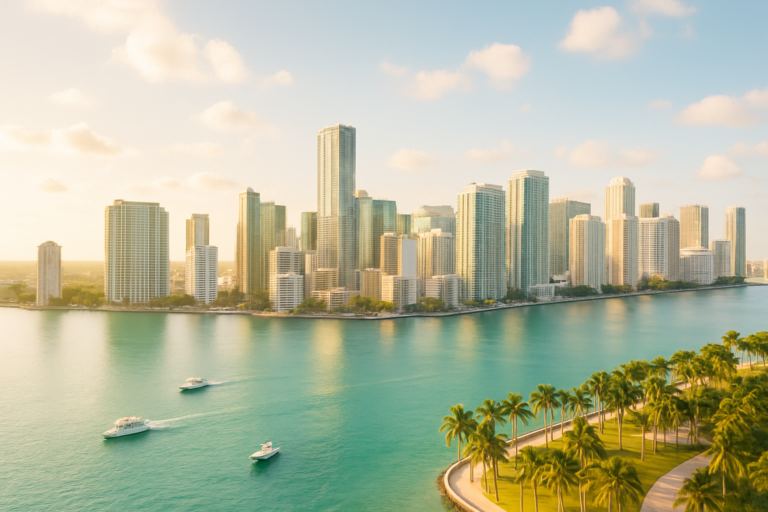
Somewhere in Miami right now, a buyer is signing for a condo that costs a third more than the physically identical apartment across the street. The floor plan is the same. The view is nearly the same. The difference is a name on the building — Aston Martin, Porsche, Bulgari, Four Seasons — and the service contract that comes bolted to it. This is the branded residence: an apartment sold as real estate, run like a hotel, and priced as both. Here is what the name actually buys, who buys it, and why the premium is smaller than it looks once you understand what you are paying for.
What it is
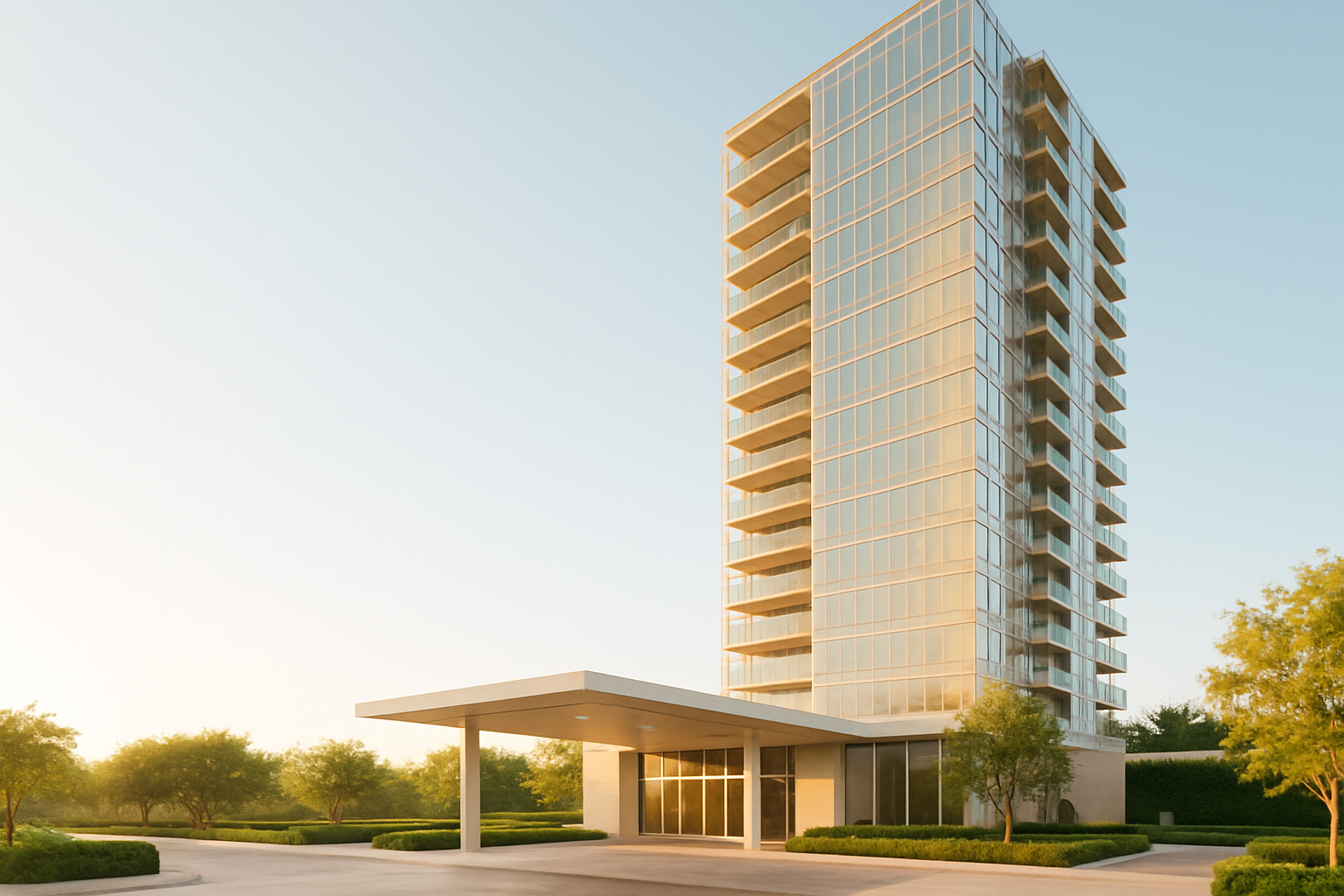
A branded residence is a home — usually a condo, sometimes a villa or a townhouse — that carries the name of a hospitality or luxury company and comes with the services that name implies. Buy into a Four Seasons Private Residence and you get a Four Seasons front desk, housekeeping, a concierge, and the brand’s service standards baked into daily life. The apartment is yours; the operation around it is run by, or licensed from, the brand.
The idea is older than the marketing. The Sherry-Netherland in Manhattan is generally credited as the first branded residence, opening in 1927 with privately owned apartments overlooking Central Park and hotel service on tap — advertised, in period language, as “more than a place to live.” Four Seasons pushed the modern version forward in North America with a Boston project in the 1980s; Ritz-Carlton opened its first branded residences in Washington, D.C., in 2000; and in Asia, Aman set the tone with Amanpuri in Phuket. What began as a pre-war Manhattan idea is now a global product category.
The crucial thing to understand up front — and the thing most people get wrong — is that the brand usually does not build the building and usually does not own it. A developer builds the tower and pays the brand for the right to use its name and run its services. Which is why the same skyline can hold a hotel-operated Four Seasons residence, a fashion-house-branded tower, and a car-brand condo, all built by different developers, all borrowing a name.
Whatever it started as, the category is now big and growing fast. Savills counted 764 branded residential schemes worldwide at the end of 2024 and expects roughly 910 by the end of 2025 — about 19% growth in a single year — with the contracted pipeline pushing the total toward 1,747 schemes by 2032. In 2025 alone, 25 countries were slated to get their first branded project. What was once a niche marketed to a handful of Manhattan buyers has become one of the fastest-moving corners of global luxury real estate.
Who uses it
Branded residences skew toward buyers who are mobile, time-poor, and comfortable in the $5 million-and-up band, though entry-level branded units in secondary markets start well below that. The archetype is someone who wants a second, third, or fourth home they can walk into after six months away and find stocked, clean, and running — without hiring, managing, or trusting a local staff they rarely see.
At the $5 million–$30 million level, the typical buyer is a part-time resident: a pied-à-terre in a city they pass through, or a resort home they use a few weeks a year. They want a hotel they happen to own. At $30 million–$100 million and above, the buyers are global — often holding homes on three continents — and the brand functions as a portable standard. A Four Seasons in New York and a Four Seasons in São Paulo run to a recognizable script, and for someone managing residences across time zones, a known standard is worth paying for.
There is also a large cohort of investor-buyers, particularly in Dubai and Miami, who never intend to live there full-time and lean on the brand’s rental programs to keep the unit earning while they are away. For them the name is partly a management solution and partly a resale story — a recognizable brand is easier to sell to the next buyer than an anonymous luxury tower.
Geography tells you where those buyers cluster. Contrary to the usual assumption that New York or London leads, Dubai is the world’s biggest branded-residence market, with 64 completed projects and 87 more in the works, according to Savills. Miami sits second, with 48 completed and 55 planned; New York, São Paulo, and Cairo follow. The pattern is not accidental: the leaders are cities full of part-time residents, cross-border money, and buyers who want a turnkey home in a place they do not permanently live. Branded residences sell best exactly where ownership and presence come apart.
Why they use it
The honest answer is not “because they can.” It is time and certainty. A large home, run well, is a small business: staff to hire, contractors to vet, deliveries to receive, standards to enforce. A branded residence outsources all of that to an operator whose entire reputation rests on getting it right. You are buying the removal of a management problem, and for people whose scarcest resource is attention, that trade is the whole point.
The second reason is a trusted standard. Wealthy buyers who already spend heavily on hotels know what a Four Seasons or an Aman feels like, and the residence promises to reproduce it at home. That predictability — the same service, the same finish quality, the same responsiveness — is exactly what the brand is selling. The name is shorthand for “you already know what this will be like.”
Then there is liquidity and status, which travel together here. A branded tower is easier to explain, easier to market, and easier to resell than an unbranded one, because the name does the describing. And, plainly, the name signals something. Owning inside an Aman or an Aston Martin building says something to a certain audience that an equally expensive but anonymous condo does not. The buyers know it, the developers know it, and the premium reflects it.
How it works
Almost every branded residence runs on a license. The brand — a hotel company, a fashion house, a carmaker — grants a developer the right to use its name and, in most cases, to operate the building’s services to its standards, in exchange for upfront fees and an ongoing cut. The developer takes the real estate risk; the brand lends the name and polices the experience. This is why the brand rarely appears on the deed and never on the construction loan.
There are two broad families. Hotel-branded residences are the original and still the largest: Four Seasons, Ritz-Carlton, Aman, Mandarin Oriental, St. Regis, Waldorf Astoria. These usually sit alongside or above an operating hotel, so residents can pull room service, spa, and housekeeping from the same staff serving hotel guests. Marriott alone stands behind more than 300 branded residences globally, making the hotel groups the center of gravity in the category.
Non-hotel branded residences are the fast-growing, attention-grabbing wing: design houses (Bulgari, Dolce & Gabbana, Armani), and carmakers (Aston Martin, Porsche, Bentley, Pagani). These lean harder on design identity and signature amenities than on a hotel staff next door. The Porsche Design Tower in Miami, delivered in 2016, is the pure expression: a 60-story tower whose patented car elevator — the “Dezervator,” named for developer Gil Dezer — lifts residents and their cars together into “sky garages” beside the living room, so a supercar parks in a glass-walled bay off the apartment. The brand is not running a spa; it is selling an idea about how you and your machine arrive home.
Many hotel-branded buildings also run a rental program, where owners can place their unit into a pool the operator rents out like hotel inventory when they are away, splitting the revenue. It is one reason branded residences attract investors as well as residents: the same staff that serves you can monetize the apartment in your absence, turning a second home into an asset that partly pays for itself. The details — how the split works, how much control you keep over availability — vary building to building and are worth reading closely before signing.
Underneath both families sits the same financial plumbing: a homeowners’ association plus brand service fees that fund the staff, the amenities, and the standard. Buyers own their units and pay monthly for the operation — which is where the real cost of the lifestyle lives.
What it costs
Start with the headline. Savills, which tracks the sector globally, puts the average branded-residence premium at 33% over a comparable non-branded property in its 2025–26 report — rising to about 39% in resort locations and around 30% in established and emerging cities. That is the number to hold onto: roughly a third more for the name and the service model attached to it.
On top of the premium sits the carrying cost. Branded residences charge monthly fees that fund the staff and amenities, and they run well above ordinary luxury-condo dues because they are paying for a hotel-grade operation. Buyers should assume service and HOA charges that can reach into five and six figures a year depending on the building and unit — the standard costs money to maintain, every month, whether you are there or not.
The sticker prices, at the top, are eye-watering. At Aman New York, which opened in 2022 with just 22 residences above the hotel, the average price ran to roughly $8,357 per square foot — more than three times the surrounding Midtown West average — and a five-story penthouse sold for $135 million, the most expensive New York sale of its year. In Miami, the Aston Martin Residences sky penthouse sold for about $23 million in December 2024 — a downtown record — with the deal reportedly including a matching custom Aston Martin DBX; another unit in the tower closed near $24 million. At the Porsche Design Tower, the four-story penthouses were priced around $32.5 million, each with a private car gallery for roughly eleven vehicles.
Those are the trophies. Most branded residences sell far below them — entry-level branded units exist in the low seven figures and, in some markets, below $1 million — but wherever they sit on the ladder, the branded version costs meaningfully more than the unbranded one beside it.
Hidden costs and tradeoffs
The monthly fee is the obvious one, and it never stops. But the subtler risk is that the name can leave. A branded residence depends on a license, and licenses expire, get renegotiated, or fall apart when a building’s ownership and the brand fall out. When a tower loses its flag — “de-flagging,” in the trade — the residents can wake up owning an ordinary luxury condo that no longer has the service or the name they paid a premium for. The brand you bought is not permanent in the way the concrete is.
The premium also may not fully survive resale. Buyers pay about a third extra going in, but whether that holds when they sell depends on the building’s reputation, the brand’s continued strength, and how the wider market is doing. A branded residence in a well-run, well-located building tends to resell well; one in a project where service has slipped, or where the brand has diluted itself across too many towers, may not command the same markup on the way out. The premium is a bet on the operator staying good.
Then there is the loss of control that comes with any managed building. Rules, restrictions, approved-vendor lists, and rental policies are set by the operator to protect the standard, and owners who want to do things their own way can find a branded residence more constraining than a comparable private home. You are buying into a system, and the system has opinions. For the buyer who wanted turnkey ease, that is a feature. For the buyer who wanted a blank canvas, it is a cost.
What people get wrong
The biggest misconception is that the brand owns and guarantees the building. It usually does not. The name is licensed, the services are run to a contract, and the financial backstop is the developer and the HOA — not the deep pockets of the hotel or car company on the door. Understanding that reframes the whole purchase: you are buying a developer’s real estate wrapped in a brand’s operating standard, and the durability of the second part depends on a contract that can change.
The second error is treating the premium as pure vanity. Some of it is status, certainly. But a real share of that roughly one-third markup pays for something concrete: a managed, staffed, turnkey operation that would cost real money and real attention to assemble yourself, plus the resale liquidity that a recognizable name provides. Whether it is worth 33% is a fair debate; pretending it buys nothing but a logo is not.
The third mistake is assuming all branded residences are the same. A hotel-operated Four Seasons residence with staff sharing the tower is a very different product from a name-only license where a fashion or car brand lent its identity and a signature lobby but runs no daily service at all. Both are “branded.” Only one comes with the hotel behind the wall. Before paying the premium, the question worth asking is not “whose name is on it?” but “who actually runs it, and for how long are they contracted to?”
Bottom line
The answer to the Million Dollar Question is C — about 33%. That is the global average premium Savills attaches to the name and the service model, a little higher at resorts, a little lower in cities. It is a large number, and it is not nothing-for-something. What it buys is a managed standard and an easier exit: a home that runs like a hotel, a brand that makes the unit legible to the next buyer, and the removal of the staffing and management burden that a large second or third home otherwise creates. For the mobile, the time-poor, and the buyer who genuinely values never thinking about the operation, that trade can make sense. For the buyer chasing maximum value per square foot, the same money buys more house next door — just without the name, and without anyone to answer the door.
Related reading: Houses: First Homes, Second Homes, and Estates · Hotels and Villas: How the Wealthy Stay Away From Home · Staff: Outsourcing Daily Life · ZIP Codes: Where the Wealthy Live · Cars: Luxury, Collecting, and the Cost of Ownership