
Proximity Wealth: Washington, Delhi, and Fortunes Built Next to Power
The Million Dollar Question: In March 2025, Mark Zuckerberg paid cash for a house in Washington, DC — a “brisk stroll” from the Vice President’s residence. How much?
A) $8 million B) $15 million C) $23 million D) $40 millionRead on for the answer.
Most wealth-migration stories run one direction: people and companies moving toward lower taxes and lighter regulation, Miami and Austin and zero-income-tax states pulling money away from expensive, rule-heavy capitals. Washington, DC and Lutyens’ Delhi are running the opposite trade. In both cities, some of the wealthiest people on earth are paying record prices to live physically closer to the people who write the rules — not to escape government, but to be inside its blast radius.
What it is
Proximity wealth is the premium paid to live and operate within physical reach of the institutions that allocate government money, write regulation, or grant access — a house near the White House, a bungalow near India’s Parliament, an office a short walk from a regulator’s desk. It is a distinct, non-tax motive for where money chooses to live, and it has become more valuable as more of the modern economy — federal contracting, AI policy, defense, sanctions enforcement, industrial subsidy — runs through decisions made by a small number of officials in a small number of buildings.
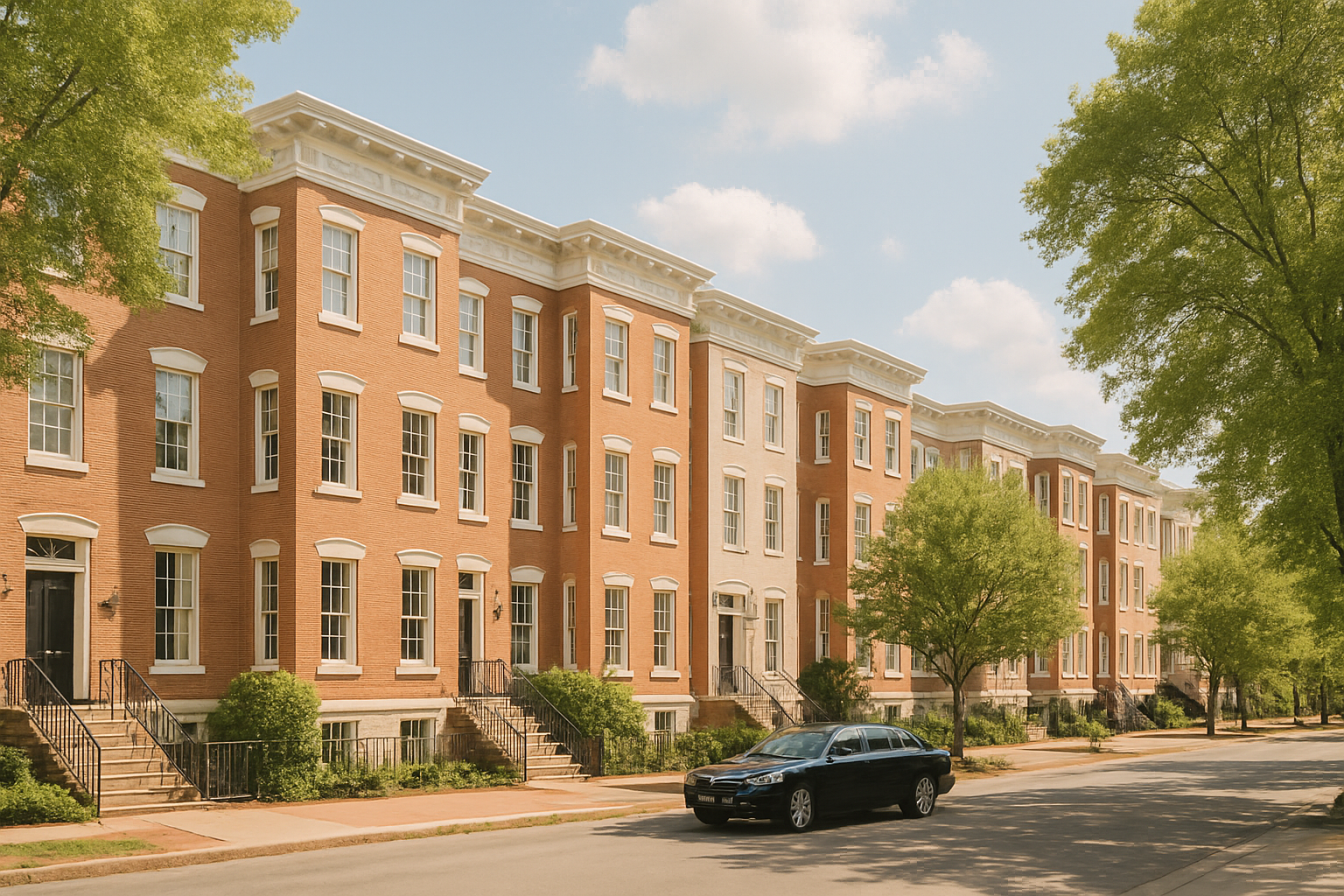
Washington’s version of this story broke into public view in 2025 and 2026 as a wave of ultra-wealthy tech figures and political appointees bought trophy homes in the city’s older, discreet neighborhoods. Robb Report tracked the trend: Meta’s Mark Zuckerberg, Amazon founder Jeff Bezos, PayPal co-founder Peter Thiel, former Google CEO Eric Schmidt, and a cluster of Trump-administration cabinet picks and senators all bought multimillion-dollar houses in Kalorama, Georgetown, Foxhall, and Massachusetts Avenue Heights inside a few years of each other. Commentators, including one widely shared post that called it “America’s newest billionaire boomtown,” framed it as a new phenomenon, but the underlying logic — pay a premium to be near the room where decisions happen — is old. What changed is the scale of money now making that trade.
Delhi’s version is centuries older in spirit and far more rigid in structure. The Lutyens Bungalow Zone (LBZ), the roughly 3,000-acre core of the capital designed by British architect Edwin Lutyens in the 1910s and 1930s, holds about 1,000 bungalows. Fewer than 100 are privately owned; the rest house ministers, judges, senior bureaucrats, and diplomats. Real estate deals in the zone are opaque and off-market — there is no listed price, because almost nothing is ever formally for sale — and yet, when a bungalow does change hands, it regularly resets the record for the most expensive residential transaction in Indian history.
Who uses it
In Washington, three overlapping groups are buying. The first is tech leadership with direct federal exposure: companies like Meta, Amazon, and OpenAI now depend on Washington for AI policy, antitrust posture, defense contracts, and content regulation, and their founders and executives are buying homes rather than just hotel suites for their DC trips. The second is the current wave of political appointees, many of whom arrived personally wealthy — a Public Citizen analysis reported by Fortune found 57 officials in the current administration worth $100 million or more, including eight billionaires, versus five such officials each under George W. Bush and Joe Biden and three under Barack Obama. The third is Northern Virginia’s older, quieter contractor class: executives at defense and intelligence contractors, and increasingly at the data-center and cloud companies serving federal agencies, concentrated in McLean and Great Falls — the same corridor that houses CIA headquarters and consistently ranks among Virginia’s wealthiest zip codes.
Layered underneath both groups is a quieter, longer-standing population: the principals of Washington’s lobbying and government-relations firms clustered along K Street, whose entire business model has always depended on being close enough to Capitol Hill to walk a meeting in. What is new is not their presence but the company they now keep — K Street’s founders used to be the wealthiest people within a mile of the Capitol; today they are a comparatively modest tier next to the tech and appointee money buying in around them.
In Delhi, the private LBZ owners are a small, mostly hereditary group: pre-independence allotment families, industrial dynasties such as the Birlas and Jindals, and a rotating handful of new-economy billionaires who buy in whenever an old family finally sells. Around the LBZ’s edges — Golf Links, Jor Bagh, Sunder Nagar — sits a wider ring of Delhi’s top business families trading in similar, if slightly less rarefied, proximity.
Why they use it
The Miami story is about lowering a bill. This story is about raising the odds of a phone call being answered. At the wealth levels involved, a five-minute conversation with the right regulator, appointee, or committee staffer can be worth more than an entire outside-counsel engagement, and that kind of access compounds with physical presence — running into someone at a neighborhood restaurant, being a plausible dinner invitation, showing up in person for a hearing instead of dialing in. Politico’s reporting on the Zuckerberg purchase captured this directly: a Meta spokesperson said the home would let the CEO “spend more time [in D.C.] as Meta continues the work on policy issues related to American technology leadership.”
For officials who are already wealthy before they take office, the calculation runs the other way: a serious DC address signals that the posting is not a temporary inconvenience but a real commitment, and it puts them inside the same social infrastructure — dinners, school pickups, neighborhood block parties — as the permanent Washington establishment they now have to work with.
In Lutyens’ Delhi, the logic is closer to owning land under a monument than owning a house. An LBZ address puts a family a few minutes from Parliament, the Rashtrapati Bhavan (the presidential residence), the Supreme Court, and most foreign embassies, and does so in a country of 1.4 billion people where that kind of physical centrality cannot be recreated at any price, because the conservation rules that protect the zone also freeze its supply permanently.
How it works
Washington’s market runs through ordinary residential real estate — no shell structures, no special access tier, just scarce trophy inventory in a handful of historically discreet, low-density neighborhoods bidding against a much larger pool of money than existed a decade ago. Northern Virginia’s contractor wealth is more conventional still: high-paying jobs at defense, intelligence, and (increasingly) data-center and cloud-infrastructure employers concentrated in a few Fairfax County zip codes close to the Beltway and Dulles corridor.
Delhi’s LBZ works on entirely different rules. Government conservation regulations cap building height, prohibit subdividing plots, and make redevelopment beyond a bungalow’s original footprint almost impossible to approve. That freezes supply absolutely: no new private LBZ bungalows can be created, so the roughly 100 in private hands are, functionally, all there will ever be. Deals are negotiated privately, often through a single trusted intermediary, and can take well over a year to close. There is no public listing, no open bidding process, and — outside of the rare record sale that leaks to the press — no reliable public price at all.
What it costs
Washington’s recent trophy purchases, per public real estate reporting, cluster in a fairly tight band for this wealth tier: David Sacks paid $10.3 million for his DC home; Senator David McCormick paid $10.5 million for a Georgetown residence; Treasury Secretary Scott Bessent — worth over $700 million per his financial disclosures — paid $12.5 million for a Federal-style Georgetown home; Peter Thiel paid $13 million for a Woodland Drive estate in 2021; Eric Schmidt paid $15 million for a storied N Street residence once home to Jacqueline Kennedy Onassis; Jeff Bezos paid $23 million for the former Textile Museum in Kalorama in 2016 (and reportedly another $5 million for a house across the street); Mark Zuckerberg paid $23 million, all cash, for his Massachusetts Avenue Heights home in March 2025; and Commerce Secretary Howard Lutnick set a neighborhood record at $25 million for a French chateau-style home in Foxhall. In bracket terms, this is the $10M–$25M tier of the $100M+ wealth band — not the very top of the U.S. housing market, but a clear, self-reinforcing step above what these buyers were spending on DC real estate a decade earlier.
Lutyens’ Delhi operates at a different scale entirely, priced in Indian crore (1 crore = 10 million rupees, roughly $105,000–$110,000 at the rupee’s 2026 exchange rate of about ₹94–95 to the dollar). Entry-level private LBZ bungalows run roughly ₹150–250 crore (about $16M–$26M); marquee deals on the better streets have reached ₹400–800-plus crore (roughly $42M–$85M or more). The record so far: 17 Motilal Nehru Marg, the first official residence of independent India’s first prime minister, Jawaharlal Nehru, sold in 2026 for ₹1,100 crore — roughly $115M at current exchange rates — for a 3.7-acre estate, after an initial asking price of ₹1,400 crore. The buyer was reported only as an industrialist from India’s beverage sector; the sellers were descendants of a Rajasthani royal family. The “almost-Lutyens” ring just outside the zone — Golf Links, Jor Bagh, Sunder Nagar — trades more often, in the ₹40–200-plus crore range, and still regularly beats the most expensive apartment sales in Mumbai or Gurgaon.
Hidden costs and tradeoffs
Both markets carry costs that don’t show up in the purchase price. In Washington, a high-visibility address near the center of government also means living inside the news cycle — protests, stakeouts, and scrutiny of a kind that a house in Palo Alto or Greenwich rarely attracts, plus the unusual risk that an administration change every four or eight years can devalue the specific access a purchase was made to buy. Political appointees who buy while in office also invite exactly the kind of “buying influence” narrative that outlets like Public Citizen exist to track, whether or not the purchase was made for that reason.
In Delhi, the cost is illiquidity taken to an extreme. A bungalow that took over a year to sell is not an asset a family can convert to cash quickly, and because there is effectively no market — no comparable sales, no public listings, no standard valuation method — pricing every transaction requires starting from scratch. Owning in the LBZ also means owning under permanent construction restrictions: no adding square footage, no redeveloping, no capturing the kind of upside that turned raw land into towers elsewhere in Delhi and Gurgaon over the same decades. Families who need liquidity, rather than status, generally do not hold LBZ property at all — they hold the more tradeable, if less prestigious, real estate ringing it.
There is also a coordination cost specific to proximity wealth that other geographies don’t carry: living near power means living near everyone else who wants something from the same power, which compresses an already small social world into a place where reputations travel fast and rivalries are unusually visible. A bad headline in Washington reaches the people who matter to a company’s federal contracts within hours, in a way a bad headline in a more anonymous zip code simply does not.
What people get wrong
The most common mistake is assuming all wealth relates to government the same way — that money either avoids the state (Miami, Puerto Rico, the zero-income-tax states) or extracts favors from a comfortable distance through lobbyists and lawyers. Proximity wealth is neither: it is a bet that showing up, in person, inside a specific few square miles, changes outcomes enough to justify a premium that has nothing to do with square footage or school districts.
People also underestimate how recent Washington’s shift is. As recently as the 2000s and 2010s, DC real estate was expensive by national standards but well behind the coastal money centers; it was not, historically, where founders and financiers wanted a primary or even a serious secondary home. The current wave — measured in a compressed handful of years — reflects how much of the economy that produces new fortunes (AI, defense technology, cloud infrastructure, sanctions and export-control-sensitive trade) now runs through Washington decisions, rather than a permanent, longstanding feature of how the wealthy have always lived.
And on Lutyens’ Delhi specifically, outsiders often assume the value is architectural — grand colonial-era houses worth preserving. Real estate professionals who track the zone are clear that the house itself is close to incidental. What buyers are actually purchasing is unrepeatable land, frozen by law at its current supply, in the exact center of a 30-million-person metropolitan region, a few minutes’ drive from the country’s most powerful people.
Bottom line
The answer is C: Mark Zuckerberg paid $23 million, in cash, for his 2025 Washington home. That number, and the parallel run of $10-million-plus purchases by tech leaders, cabinet officials, and senators around him, mark a real shift — wealth choosing to sit closer to government rather than farther from it, because in a policy-driven economy, proximity itself has become an asset worth paying for. Lutyens’ Delhi shows the same instinct taken to its logical extreme: a frozen, off-market real estate zone where a 3.7-acre plot with a house once occupied by the country’s first prime minister sells for roughly $115 million, not because of the architecture, but because there is no more land left to sell in the one neighborhood where every embassy, every ministry, and the Prime Minister himself are all a short walk away.
Related reading: ZIP Codes: Where the Wealthy Live looks at the broader geography of wealth this piece specializes into government proximity. Billionaires Flood Miami is the direct mirror image — wealth migrating toward lower taxes rather than closer to power. Politics: How Wealth Buys Access and Influence covers the access mechanics this piece’s real estate makes physical. Campaign Donors: Money in Modern Politics is the companion piece on the financial side of the same Washington access economy. Think Tanks and Influence Networks maps the other quiet infrastructure clustered in the same few Washington neighborhoods.