Boarding School: Elite Education Away From Home
The Million Dollar Question: Switzerland’s Institut Le Rosey, widely ranked the most expensive school in the world, charges roughly how much per year for tuition and board?
A) $45,000 B) $90,000 C) $135,000 D) $205,000Read on for the answer.
Send a fourteen-year-old to live at school, and you are buying something more complicated than an education. You are buying a particular kind of independence, a four-year immersion in a small and intense community, and — the part nobody puts in the brochure — a place in a network that can outlast the diploma by half a century. The tuition is the easy thing to measure: north of $70,000 a year at the famous American schools and more than $200,000 at the top of the Swiss market. This piece is about everything the number doesn’t capture — who actually sends their children, what the money really buys, and what most people get wrong about how the whole system works.
What it is
A boarding school is a school where students live on campus during term, going home for holidays and some weekends rather than every evening. That single fact reorganizes everything: meals, sports, study hours, friendships, and discipline all happen inside one institution that runs roughly twenty-four hours a day. Most of the well-known schools serve grades nine through twelve, often plus a “postgraduate” year that lets athletes and late-bloomers add a season of maturity before college. Many also enroll day students who go home at night, so “boarding school” usually means a mixed community of full boarders, weekly boarders, and locals.
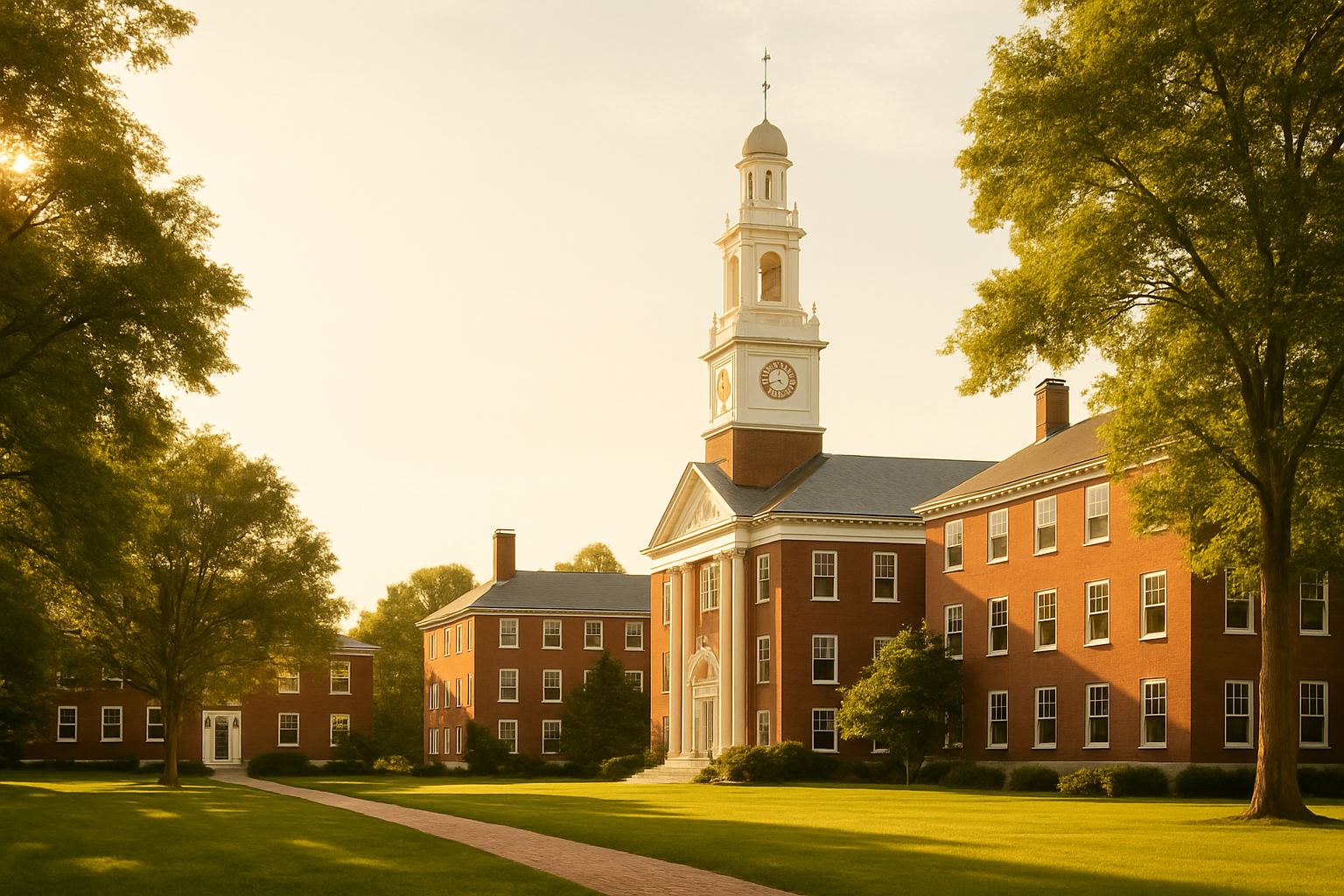
In the United States, the recognizable center of gravity is a cluster of old New England institutions — Phillips Exeter, Phillips Academy Andover, St. Paul’s, Groton, Choate Rosemary Hall, Deerfield, Hotchkiss, and a handful of others. The informal “Ten Schools” association, founded between 1778 and 1914, collectively enrolls roughly 7,500 students. These are small places by design; the scarcity is part of the product.
Abroad, the model splits into two distinct traditions. Britain has its historic boarding schools — Eton, Harrow, Winchester — with centuries of ritual and a direct line into Oxford, Cambridge, and the British establishment. Switzerland runs the most international and most expensive version: schools like Institut Le Rosey, founded in 1880, which moves its few hundred students between a lakeside campus near Geneva and a winter campus in the ski resort of Gstaad, and educates the children of royalty and global business families from more than 100 countries. Same basic idea — children living at school — but three very different markets, with different prices and different things being sold.
Who uses it
The instinctive picture — boarding school as a holding pen for the children of the very rich — is partly true and partly a caricature, and the gap between the two is the most interesting thing about the customer base.
At the top, yes, there are the families who pay full freight without blinking, and for whom the choice is mostly about tradition and fit. These break into recognizable types. There are legacy families, where a grandparent and a parent attended the same school and the application is less a question than a formality. There is newer wealth — founders, finance, professionals at the upper end — buying their children into an environment and a network they didn’t have themselves. And there is a large international contingent, especially at the Swiss and British schools, where wealthy families from Asia, the Gulf, Latin America, and Africa send children abroad for an English-language education and a globally legible credential.
But the assumption that everyone is paying $70,000 a year is wrong, and this is the twist that reframes the whole topic. The wealthiest American schools are also among the most heavily subsidized. Phillips Exeter admits students on a need-blind basis — meaning ability to pay is not a factor in admission — and roughly 45% of its students receive financial aid, funded by a $1.65 billion endowment. Andover is also need-blind, meets 100% of demonstrated need, gives aid to nearly half its students, and awards full scholarships to about 13% of them, backed by a $1.41 billion endowment. Starting in 2025, Exeter became free for families earning under $125,000. So the realistic student body at the very top schools is a barbell: a core of full-pay families on one end, a substantial group of high-achieving students on heavy aid on the other, and the full-pay families effectively helping fund the scholarship students’ seats. The lower a school’s endowment, the more it depends on full-pay tuition — which is why the most prestigious schools can afford to be the most economically mixed.
Why they use it
“Because they can afford it” explains almost nothing here, since plenty of families who can afford it choose excellent local day schools instead. Three motives do the real work, and they map onto three different things the school is actually selling.
The first is academics and environment. Boarding schools concentrate strong students, small classes, and a residential structure that turns the whole day into learning time. TABS, the boarding schools’ own association, reports that boarders are far more likely than other students to work one-on-one with teachers and to spend long hours on academic work outside class — claims that are self-interested but broadly consistent with how the schools are built. For an ambitious student, the appeal is a peer group where working hard is normal rather than something to hide.
The second is independence. A residential school asks a teenager to manage time, conflict, laundry, and homesickness years before a day student would. Parents who send children away often frame this as the real curriculum: a controlled rehearsal for college and adulthood. Whether that’s worth the cost of missing four years of family dinners is exactly the kind of tradeoff that divides families with identical bank balances.
The third — the one rarely said out loud — is the network. A boarding school is a sorting machine that places a child inside a particular social world for four formative years and keeps them connected to it for life. Classmates become college roommates, business partners, references, and marriages. The roster of past students is its own argument: Groton produced Franklin Roosevelt and a long line of diplomats; Andover produced two U.S. presidents, George H.W. Bush and George W. Bush; Exeter counts Mark Zuckerberg among its alumni. Families wired into these worlds are buying continuity; families new to them are buying admission. For the latter group especially, the network is the asset, and the academics are the respectable way to describe it.
How it works
Getting in is a real contest. Admission to the well-known American schools typically runs through the SSAT (a standardized entrance test), transcripts, teacher recommendations, essays, and an interview, with applications usually filed in the winter for fall entry. Acceptance rates at the most sought-after schools sit around 13% at Andover, Exeter, and St. Paul’s, rising to the low-30s at less famous boarders — competitive enough that families hire admissions consultants and test tutors, importing the whole apparatus of college admissions to the ninth-grade level.
Once enrolled, the daily structure is what distinguishes boarding from day school. Students live in dormitories or “houses,” each overseen by resident faculty who function as a cross between a teacher and a stand-in parent. Classes are small and often discussion-based; Exeter is famous for the Harkness table, an oval seminar table around which a dozen students and one teacher discuss the material, with no lectures and nowhere to hide. Afternoons go to required sports or arts, evenings to supervised study hours, and the whole rhythm is designed so that academics, athletics, and community life reinforce each other rather than compete.
The part that quietly justifies the price for many families comes at the end: college counseling. These schools maintain dedicated counseling offices with low student-to-counselor ratios and decades of relationships with university admissions offices. The schools are careful — rightly — not to promise outcomes, and the days when a famous boarding school was a near-automatic ticket to a specific Ivy are gone. But the counseling is genuinely expert, the recommendation letters carry weight, and matriculation lists still skew heavily toward selective universities. A school like Groton sends a meaningful share of each small graduating class to the most selective colleges in the country — not because the name opens a back door, but because the school selects strong students, develops them intensely, and then advocates for them with institutional credibility.
What it costs
Boarding school sits in a strange pricing zone: more than most private day schools, often more than in-state public college, occasionally more than a private university. The useful way to read the market is by region.
The United States: roughly $65,000–$80,000 a year. For 2024–25, Andover charged boarding students about $73,780; Exeter’s boarding tuition runs in the high-$60,000s. That figure generally covers tuition, room, and board, but extras — travel home, books, technology, activity fees, and personal spending — add up, and the international flights for overseas students can be substantial on their own.
The United Kingdom: around £63,000 a year, and rising. Eton’s fees run to roughly £63,000 annually after the UK government removed the VAT exemption on private-school fees in January 2025, adding 20% to the bill overnight. That policy change has reshaped the British market, pushing some families toward day schools or abroad and squeezing the schools that depended on price-sensitive parents.
Switzerland: the top of the market, $150,000–$205,000 a year. Institut Le Rosey charges CHF 159,600 — roughly $205,000 — for 2026–27, all-inclusive of tuition, board, sports, most activities, and transport between its two campuses. It has held the Guinness World Records title for most expensive school since 1955, and other Swiss schools cluster not far behind. At this tier the price buys deliberate scarcity: a few hundred students, more than 100 nationalities, and an environment engineered for the children of the globally rich to meet one another.
The honest summary is a wide bracket. Expect roughly $65,000–$80,000 at top US schools, £55,000–£65,000 in the UK, and $140,000–$210,000 at the Swiss schools — before extras, and before the financial aid that, at the wealthiest American schools, brings the real cost for many families far below the sticker.
Hidden costs and tradeoffs
The tuition is the visible cost. The harder ones don’t appear on an invoice.
The first is simply distance. Sending a child away at thirteen or fourteen means missing four years of ordinary family life — the dinners, the small daily check-ins, the witnessing of a kid growing up. Some families experience this as a healthy launch; others quietly regret it. Homesickness is real, especially in the first year and especially for international students who can’t easily go home for a long weekend, and not every adolescent thrives when independence arrives that early.
The second is mental health and pressure. Concentrating high-achieving teenagers in a competitive, always-on environment, far from home, is a recipe for stress as much as for excellence. Good schools invest heavily in counseling and pastoral care precisely because the residential model removes the natural decompression of going home each night. For the right student it builds resilience; for the wrong one it can amplify anxiety with no escape valve.
The third is the most serious, and it deserves to be stated plainly: boarding schools have a documented history of abuse that institutions covered up. A landmark Boston Globe Spotlight investigation found that at least 67 New England private schools faced accusations that staff had sexually abused or harassed more than 200 students since 1991. Specific institutions have reckoned publicly with their pasts — Choate Rosemary Hall acknowledged decades of faculty abuse after an independent investigation, and St. George’s School reached settlements with dozens of victims. The residential structure that makes the schools intense — adults with broad authority over children, living together, away from parents — is the same structure that made historical abuse possible and easy to hide. Today’s schools have far stronger safeguarding, mandatory reporting, and oversight, but any honest account of boarding has to treat this as a category of risk, not a footnote.
What people get wrong
The biggest misconception is that boarding school is only for the rich. As the financial-aid numbers show, the most prestigious American schools are need-blind, meet full demonstrated need, and educate a substantial share of students on heavy aid — at Exeter, aid reaches about 45% of students, and the school is now free below a six-figure family income. A talented student from a modest background can attend these schools for little or nothing. What’s true is that the experience is expensive to provide; what’s false is that only wealthy children get it.
The second misconception is that the academics are the product. They’re excellent, but a wealthy family choosing boarding over an equally strong local day school is usually buying the residential network and the independence, not a measurably better calculus class. The clearest evidence is that the schools themselves market the community and the connections as heavily as the curriculum — because for the families who can choose freely, that’s the differentiator.
The third is that a famous boarding school guarantees the Ivy League. It once came close; it no longer does. Selective-college admission has grown vastly more competitive, and the same name that opened doors in 1985 now mainly buys expert counseling, credible recommendations, and a strong applicant pool — real advantages, but not a guarantee. Plenty of boarding-school graduates are rejected by their first-choice colleges every year.
A subtler point ties these together: the network compounds most for the families who least need it. A student from a connected family enters boarding school already inside the world the network serves, and four years deepen ties that were going to exist anyway. A scholarship student from outside that world gains genuine access — and this is the real engine of mobility in the system — but has to work to convert proximity into belonging. The network is most valuable to the outsider and most frictionless for the insider, and confusing those two is how families overestimate what the name alone will do.
Bottom line
The Million Dollar Question’s answer is D: about $205,000 a year at Le Rosey — a number larger than the cost of most universities, for a high school. But the price is the least revealing part of the story. Boarding school sells three distinct things bundled into one tuition: a concentrated academic environment, an early and demanding independence, and a durable place inside a particular social network. The first is real and, at the top American schools, surprisingly accessible thanks to need-blind admission and billion-dollar endowments. The second is a genuine tradeoff that splits families with identical means. The third — the network — is the quiet reason wealthy families keep choosing it over excellent day schools, and it’s the asset that compounds for generations. What the money can’t reliably buy is a specific college, a guaranteed temperament fit, or immunity from the risks that living away from home at fourteen carries. The smartest families treat the decision as what it is: not a purchase of prestige, but a high-stakes bet on a particular kind of childhood.
Related reading: Education: Schooling, Admissions, and Advantage · College Admissions: How Wealth Expands the Playing Field · Children: How Wealth Shapes Upbringing and Opportunity · Generational Wealth: How Long Fortunes Actually Last · Private Clubs: Membership, Status, and Access · Raising Heirs: Teaching Wealthy Kids About Money · Legacy: Inheritance, Heirs, and Family Continuity