
The Heirless Fortune: What Happens to Money With No One to Inherit It
The Million Dollar Question: The Milton Hershey School Trust began in 1923 valued at roughly $60 million, funded by a chocolate magnate who had no children and decided to make “the orphan boys of the United States” his heirs instead. As of its most recent financial filing, what are the trust’s total assets today?
A) $2.3 billion B) $8.9 billion C) $23.4 billion D) $61 billionRead on for the answer.
Most of what gets written about inherited wealth assumes the obvious: there is a fortune, and there is a family waiting on the other end of it. A meaningful share of large fortunes don’t work that way. No spouse, no children, no clear next generation — and the money still has to go somewhere. This is the post for that case.
What it is
A heirless fortune is simply a large pool of money with no spouse or descendant positioned to receive it by default. That can happen by circumstance — someone never married or had children — or by a kind of soft default, where children exist but the fortune’s owner has already decided, publicly or privately, that the bulk of it is going somewhere else. It is a different problem from disinheritance, where an heir exists and is deliberately cut out; a heirless estate has no one in that seat to begin with, which removes the family-conflict question but replaces it with a harder one: who, or what, stands in for “family” when nothing does.
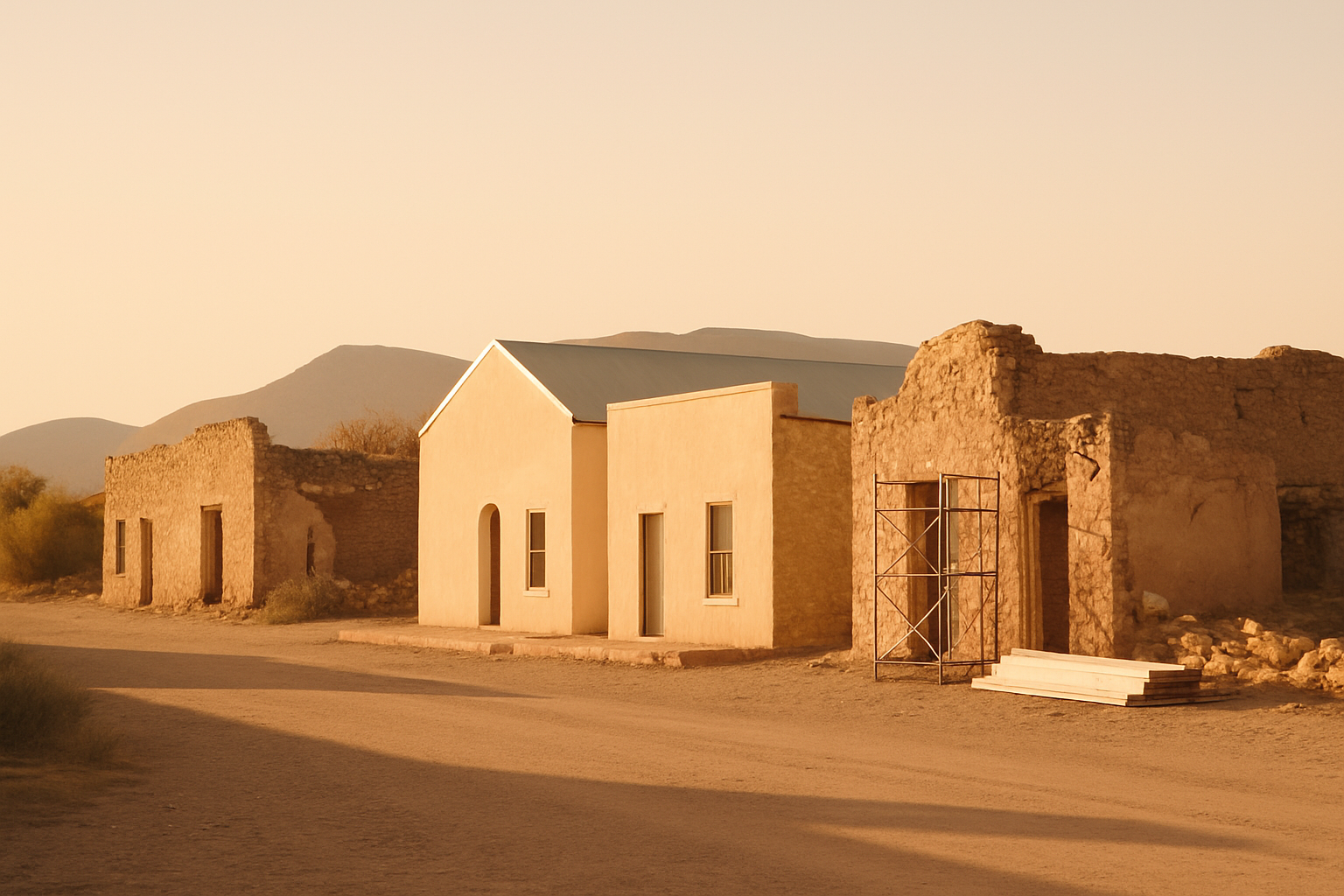
The person doesn’t disappear from the story just because there’s no heir. John B. Poindexter, 81, built J.B. Poindexter & Co. from $40 million in 1994 revenue into a company now running at more than $2.7 billion annualized — its Morgan Olson unit alone builds roughly two-thirds of the step vans on American streets, including UPS’s brown delivery trucks. “I’ve never been married, I have no children,” he told Fortune in September 2026. His money is going to Shafter, Texas: a former silver-mining ghost town of about 25 people in the Big Bend region, where his foundation has spent the past several years buying up and restoring what’s left of the place.
Who uses it
The people who end up solving this problem fall into a few recognizable groups, and wealth level changes the stakes more than it changes the shape of the decision. At the $1M–$10M level, a childless or unmarried person without heirs typically just names a few favorite charities in a will and moves on — there’s no institution-building involved, because there isn’t enough money to build one. The interesting cases start higher up, where the fortune is large enough that “give it to charity” stops being a single decision and becomes an architecture problem.
Poindexter is the self-made, late-in-life version: a founder who built a private industrial company over four decades, never married, and is now actively directing where the money goes while he’s still alive to watch it happen. Milton Hershey is the historical version of the same instinct. He and his wife Catherine married in 1898 and had no children; after she died in 1915, he transferred his controlling stake in the Hershey Chocolate Company — valued by the press at roughly $60 million when the move became public around 1923 — into a trust for a school for orphaned and disadvantaged children he and Catherine had founded back in 1909. “I have no heirs, that is, no children,” he’s reported to have said. “So I decided to make the orphan boys of the United States my heirs.” A third version is the reclusive heiress with no descendants of her own: Huguette Clark, the copper-fortune heir who died in 2011 at 104, unmarried, with no children, leaving an estate of roughly $300 million and a will that left almost nothing to the extended family she’d barely spoken to in decades.
Why they use it
Nobody in this piece set out, at 30, to plan for a fortune with no heir. It’s usually a fact that arrives gradually — a marriage that didn’t happen, children who were never had, a family that drifted — and then has to be planned around once the money is large enough that “I’ll figure it out eventually” stops being a safe answer. What’s notable about Poindexter and Hershey both is that neither one waited for a will to make the decision for them. Poindexter is 81 and directing his foundation’s restoration of Shafter in real time, not leaving instructions for someone else to interpret later. Hershey moved his controlling stock into the trust three years after his wife’s death, while he still had decades left to run the company himself.
The psychology underneath it is less “generosity” than a specific kind of control. A known, chosen cause — a town, a school, a park — can be shaped, watched, and corrected while the founder is alive. A biological heir can’t be engineered that way, and an heir who exists but doesn’t want the role the parent wrote for them creates its own, different failure mode. In 2012, Hong Kong property developer Cecil Chao publicly offered $65 million to any man who would marry his daughter, Gigi — an attempt to produce the conventional succession he wanted despite having a daughter who had already told him, repeatedly, that she wasn’t interested in that version of her own life. She turned the offer down publicly. It’s the inverse of this post’s main subject — an heir who exists, rather than one who doesn’t — but it belongs here because it shows the same underlying problem from the other side: when the fortune’s owner can’t accept the heir on offer, the practical result is the same search for a substitute.
There’s also a plainer, less flattering motive running underneath the control argument: a cause doesn’t talk back, doesn’t have its own opinions about the money, and doesn’t force an uncomfortable conversation about what happens after the founder is gone. Picking a town, a school, or a park to fund is a decision a person can make alone, on their own schedule, without negotiating it with anyone. Picking an heir — even a willing one — never fully is.
How it works
The mechanics mostly route through structures built for exactly this situation. A private foundation is the most direct: a legal entity the founder funds, controls (often with a board stocked with people they chose), and directs during their lifetime, subject to a federal rule requiring it to pay out roughly 5% of its assets every year. A noncharitable purpose trust is a narrower tool — a trust that exists to fund a specific purpose (maintaining a building, a cemetery, a collection) rather than a named person, which is the closer legal analog to what Poindexter is doing with Shafter’s buildings and what perpetual-care trusts do for cemeteries generally. A donor-advised fund, by contrast, is built for someone who wants the tax deduction now and flexibility on where the money actually lands later — a different tool for a related problem, covered in more depth in the piece on billionaires who argue against conventional philanthropy.
Naming rights are the connective tissue between money and memory in almost every one of these cases, and they function as a kind of institutional substitute for a family name carrying forward. Hershey’s fortune didn’t just fund a school — it built and still substantially controls a town, Hershey, Pennsylvania, literally named for him. Poindexter’s foundation, the Tidewater and Big Bend Foundation, is doing something structurally similar at a much smaller scale: restoring Sacred Heart Church and the handful of other structures that make up Shafter, with his name tied to the project rather than to a bloodline. In both cases, the mechanism converts a childless fortune into something that persists under the founder’s name long after there’s no family left to carry it.
What it costs
The dollar figures here span an enormous range, and that range is itself informative about how differently this problem scales. Poindexter’s foundation has given nearly $67 million to Shafter-related restoration since late 2020, including $20.6 million in the fiscal year ending November 2024 alone, against foundation net assets of roughly $62.5 million at that point — meaning he’s actively funding it faster than the endowment is building, which only works because he’s still adding to it from his operating company. Hershey’s single 1923 transfer, worth about $60 million at the time, has compounded for a full century into assets of $23.4 billion as of the trust’s July 2024 filing — one of the largest charitable endowments in the country, now serving more than 2,100 children a year. Clark’s $300 million estate sat in litigation limbo for two years before a 2013 settlement split it roughly three ways: about $34.5 million to the 19 great- and great-great-grandchildren of her father who’d barely known her, roughly $91 million (her Santa Barbara estate, cash, and doll collection) into a new arts foundation, and at least $10 million to the Corcoran Gallery of Art — a three-way division that exists only because she left no direct descendant with an obvious claim.
Hidden costs and tradeoffs
The clearest hidden cost is time: a trust or foundation is built to run for decades or centuries after the person who funded it is gone, and nobody can fully specify, in a single document, how their intent should be interpreted that far out. Hershey’s trust has now outlived him by more than 80 years, run the entire time by trustees he never met, making decisions — about the school’s admissions, its investments, its relationship to the Hershey company itself — that he has no way to correct. That’s the tradeoff a foundation or purpose trust is built to accept: durability in exchange for losing any ability to adjust course.
That tradeoff isn’t theoretical. In 2002, the Hershey Trust’s own trustees — then sitting on a stake worth more than $8 billion — voted to sell the trust’s controlling interest in the Hershey Company, arguing a founder-era trust holding one concentrated industrial stock for eighty years was exactly the kind of risk prudent diversification exists to fix. The announcement alone pushed Hershey’s share price from roughly $62.50 to $78.30. Pennsylvania’s attorney general, running for governor at the time and backed by a town that feared losing its largest employer, sued to block the sale as a betrayal of Hershey’s intent to keep the company rooted in the town that bears his name; a judge granted an injunction, the trustees abandoned the deal, and the stock gave back most of its gain. A later academic analysis of the episode put the canceled sale’s cost to the trust’s own beneficiaries at roughly $2.7 billion in foregone shareholder value, against an estimated $850 million saved in what the researchers called “agency costs” from keeping the trust’s judgment, rather than an outside buyer’s, in charge. Both numbers are somebody’s defensible estimate of the same decision — which is precisely the kind of argument a trust invites once the person who actually founded it is no longer there to settle it.
The second cost is that a bequest can outsize the thing it’s given to, and the recipient’s own judgment then becomes the story instead of the giver’s. Leona Helmsley left $12 million in trust for her dog, Trouble, on top of disinheriting two grandchildren entirely; a Manhattan Surrogate’s Court judge later cut the dog’s trust to $2 million and restored the grandchildren to “multimillion-dollar” inheritances as part of a settlement the state attorney general’s office had to sign off on, because it also oversaw the charities named elsewhere in her will. The money was always going somewhere other than a direct descendant — the fight was over whether a court would let that “somewhere” be a pet rather than people.
The third cost, visible in Clark’s case specifically, is that a deliberately heirless will invites exactly the contest it’s trying to avoid. Her relatives argued the will disinheriting them was the product of fraud by the nurse, lawyer, and accountant who benefited from it — a claim that took two years of litigation to resolve into the settlement above. Choosing a cause instead of a family doesn’t remove the people with a plausible claim to object; it just changes what they’re arguing about.
What people get wrong
The most common mistake is reading “heirless” as “nobody benefits.” Almost the opposite is true — a heirless fortune routed into a foundation or trust typically ends up funding far more people than a direct bequest would have, just not people connected by blood. Hershey’s trust supports over 2,100 students at any given time; Poindexter’s foundation is rebuilding an entire, nearly abandoned town rather than writing one large check to one person.
The second mistake is assuming the absence of a spouse or child is the only path into this situation. Clark had living relatives — nineteen of them, eventually, in the settlement — she simply hadn’t spoken to most of them in years and chose not to leave them a meaningful share. “Heirless,” in practice, often means “chose not to leave it to the people who’d have inherited by default” as much as it means “no one exists.”
The third mistake is assuming a cause-based heir resolves the control problem that a human heir would have created. It doesn’t — it just moves the argument from “which relative gets how much” to “what did the founder actually intend, and who gets to decide a century from now.” Hershey’s trustees, Clark’s estate litigators, and eventually whoever runs the Tidewater and Big Bend Foundation after Poindexter are all doing versions of the same job: interpreting someone else’s intent after that someone can no longer clarify it.
The fourth mistake, and the one Chao’s case makes clearest, is assuming the presence of a biological heir settles the question. It doesn’t, if the parent won’t accept the heir they actually have. A fortune can be functionally heirless even with a living child standing right in front of it.
Bottom line
So: the Milton Hershey School Trust, funded by a $60 million transfer in 1923 from a man with no children, now holds C) $23.4 billion in assets, as of its July 2024 filing — more than 380 times the value of the original gift, compounding inside an institution for over a century because there was no family left to spend it down. That’s the real shape of a heirless fortune: not money that goes nowhere, but money that goes somewhere durable enough to outlast everyone who could have argued with it. Poindexter is making the same bet in real time, at a much smaller scale, on a town of 25 people instead of a school trust. Whether either bet pays off the way its founder intended is a question nobody alive today will be around to answer.
Related reading: Legacy: Inheritance, Heirs, and Family Continuity · Inheritance: The Transfer of Wealth Between Generations · Generational Wealth: How Long Fortunes Actually Last · Raising Heirs: Teaching Wealthy Kids About Money · Rich Camp: The Boot Camps Teaching Heirs How to Inherit