
Stealth Wealth: Why Some of the Richest People Look Like No One in Particular
The Million Dollar Question: In 2024, in U.S. ZIP codes where the average household income is $500,000 or more, what share of new car registrations were Teslas?
A) 2% B) 19% C) 35% D) 50%Read on for the answer.
Somewhere around 2023, “quiet luxury” and “stealth wealth” started getting used as if they were the same phrase. They aren’t. One is a fashion trend built around a $2,000 logo-free sweater, mostly aimed at people who want to look like they don’t need to try. The other is a decades-old habit, documented in some of the richest people alive, of driving an old car, living in the same house for sixty years, and never once correcting the neighbor who assumes you’re doing fine but nothing special. Both get filed under the same headline — “the rich are hiding their wealth” — and that’s exactly the mix-up worth untangling. This piece is about the second thing: what it actually is, who really does it, why they do it, and why the hard data on it is weirder than the stereotype.
What it is
Stealth wealth is the deliberate choice to keep your net worth invisible to the people around you — not illegal, not even secretive in a cloak-and-dagger sense, just quiet. It shows up as driving an ordinary car instead of an exotic one, living in a modest house in an unremarkable neighborhood, wearing clothes with no visible branding, and not mentioning the number. It is a lifestyle habit, not a legal structure — the legal version of invisibility, LLCs, trusts, and ownership privacy, is a different and much older tool for a related goal.
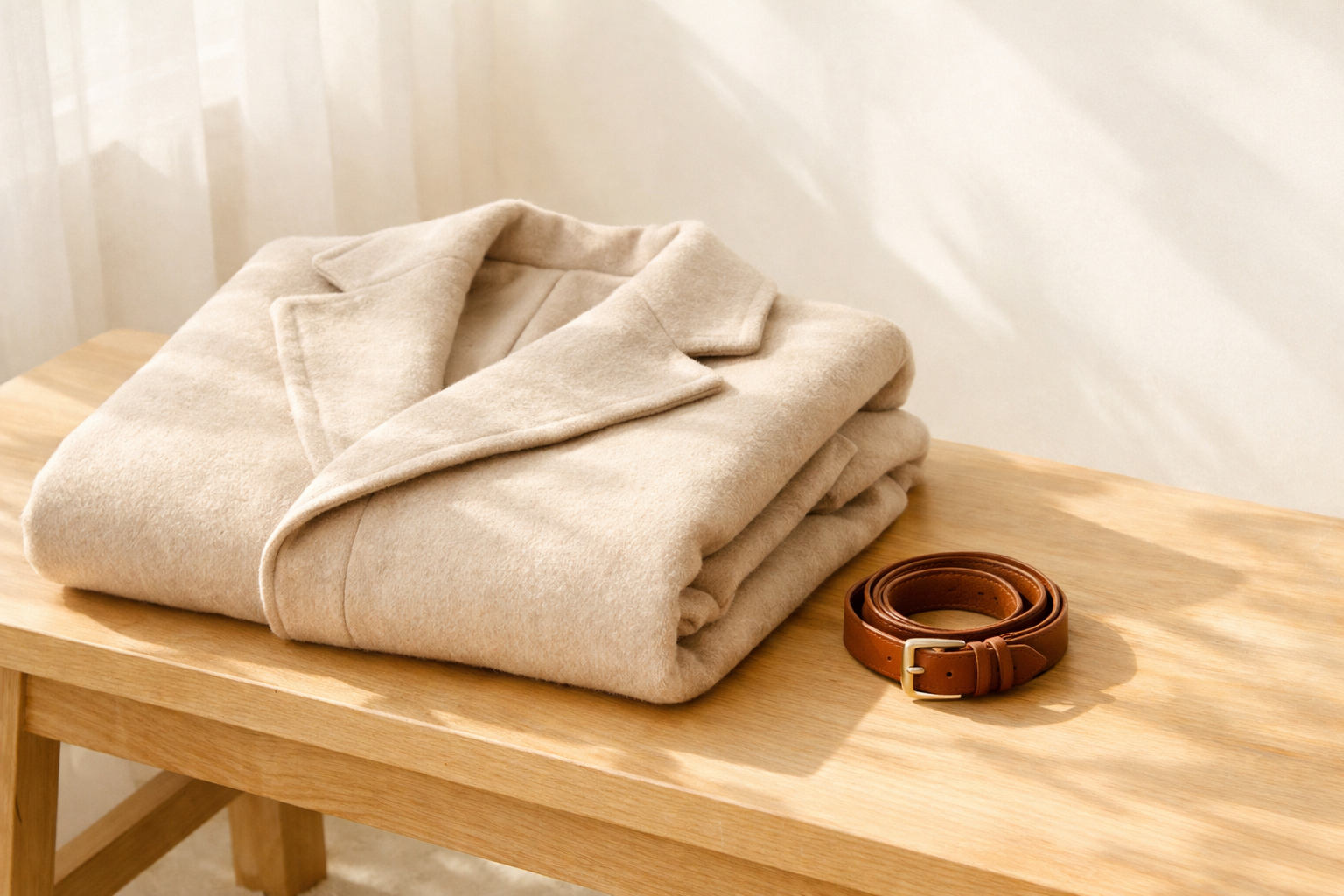
“Quiet luxury” is something else: a 2023 fashion moment, widely tied to the HBO show Succession and its cast of old-money characters dressed in unbranded cashmere, that sent sales of brands like Loro Piana and Brunello Cucinelli climbing. It is a shopping category, with its own search volume and its own price tag, and the plain cashmere sweater at the center of it is not cheap. Stealth wealth, the actual behavior, usually is.
Who uses it
The clearest examples are self-made rather than inherited, and they tend to hold the habit for decades, not a news cycle. Warren Buffett still lives in the Omaha house he bought in 1958 for $31,500, and has taken a $100,000 annual salary from Berkshire Hathaway for years — a fraction of what his own deputies earn. Chuck Feeney, the Duty Free Shoppers co-founder who gave away roughly $8 billion through Atlantic Philanthropies before his death in 2023, flew coach into his 70s and carried his papers in a plastic bag. Ingvar Kamprad, who founded IKEA, flew economy and drove an old Volvo for years. David Cheriton, the Stanford professor whose early $200,000 check into Google made him a billionaire on paper, has been reported driving a 1986 Volkswagen and cutting his own hair.
Below the headline names, there’s a whole community built around the same instinct: members of the r/fatFIRE community — people pursuing early retirement on seven-figure-plus portfolios — routinely describe hiding their actual net worth from neighbors, co-workers, and even extended family, not because the money is embarrassing but because disclosing it changes every relationship it touches.
Why they use it
Ask people who practice this and the reasons cluster into a few groups, and they are not all the same reason. For some, it’s security: a visibly wealthy household is a more attractive target for everything from burglary to kidnapping to simple opportunistic solicitation, and underselling your own wealth is a cheap, effective way to lower that profile. For others, it’s social friction — once people know the number, every interaction gets filtered through it. Loans get requested. Prices quietly go up. Friendships get weird.
There’s also a psychological dimension that researchers have given a name to: “sudden wealth syndrome,” a term coined by psychologist Stephen Goldbart to describe the isolation, guilt, and anxiety that can follow a sharp, unearned jump in net worth — lottery winners, athletes, and recent IPO millionaires are the most-studied groups. A widely cited study in the Review of Economics and Statistics tracking roughly 35,000 lottery winners of $50,000 to $150,000 found about 1,900 of them filed for bankruptcy within five years — a reminder that visible, sudden money attracts financial pressure as reliably as it attracts attention. A separate study in the American Economic Review found about 15% of NFL players had filed for bankruptcy within twelve years of retirement, despite career earnings most workers will never see — further evidence that the problem isn’t the size of the windfall, it’s how exposed and unprepared the people around it are. For old, slow-built fortunes like Buffett’s or Feeney’s, the motive looks less like trauma and more like a settled personal taste: the money was never meant to change how they lived day to day.
There’s a more practical motive, too, that gets less attention than security or psychology: negotiating leverage. A visibly wealthy buyer gets a worse price on almost everything, from a used car to a home renovation to a lawyer’s hourly rate, because the other side has priced the transaction around what it assumes the buyer can afford rather than what the work actually costs. Looking ordinary is, among other things, a way of not paying the “looks rich” surcharge — and it has the side effect of sharply cutting the volume of unsolicited pitches, from charities to financial advisors to distant relatives, that a known fortune reliably attracts.
How it works
In practice, stealth wealth is mostly a series of small, boring choices repeated for decades. The car is the clearest signal, and it is also the signal that has changed the most. In the 1990s, when Thomas Stanley and William Danko researched The Millionaire Next Door, they found most of their millionaire subjects bought used cars, held onto them for years, and leaned toward unglamorous, American-made full-size sedans — Ford and Cadillac topped their list, with Jeep, Lexus, and Mercedes trailing behind. Stanley’s figure, often repeated since, put the typical millionaire’s spending on a vehicle at around 1% of net worth, against something closer to 30% for the average buyer.
That picture has moved. S&P Global Mobility’s 2024 analysis of new-vehicle registrations in U.S. ZIP codes averaging $500,000 or more in household income found Tesla with roughly 19.3% of those registrations — almost one in five — against about 4.7% nationally, with BMW a distant second near 10%. The top six brands in those ZIP codes (Tesla, BMW, Mercedes-Benz, Land Rover, Audi, and Toyota) accounted for 53% of registrations, and exotic brands made up only about 4% of the mix; Ferrari, the top exotic name, ranked just 20th overall. The single most popular model in America’s richest ZIP codes in 2024 was the Tesla Model Y — base price under $48,000. The cliché said rich people drive beat-up Fords or screaming-red Lamborghinis. The actual 2024 answer is closer to: a nice, mainstream electric crossover that a dentist could also afford.
The rest of the habit shows up the same way, just less measurably. The house is usually bought once, decades earlier, and never upgraded for show — Buffett’s is the extreme version, but the pattern repeats below the billionaire level in ordinary subdivisions where a longtime owner’s net worth has quietly outgrown the street. Clothing skips the logo entirely rather than hiding an expensive one; a stealth-wealth wardrobe is less often an unmarked Loro Piana coat than a plain cotton shirt from a mall brand, chosen because no one will ask about it. And, especially among the r/fatFIRE community, there’s a habit of simply not correcting the record — letting a neighbor or coworker’s assumption that you’re solidly middle class stand, rather than volunteering the real number.
It helps to put the fashion trend and the lifestyle practice side by side, because the confusion between them is the whole reason this piece exists:
| Quiet luxury (the fashion trend) | Stealth wealth (the practice) | |
|---|---|---|
| What it is | A 2023 shopping category | A decades-old lifestyle habit |
| Typical cost | High — unmarked cashmere, same price as logoed goods | Low to moderate — a used sedan, an unrenovated house |
| Audience | A small circle who recognizes the brand anyway | No audience at all, ideally |
| Best-known examples | Succession’s cast, Gwyneth Paltrow’s off-duty style | Warren Buffett, Chuck Feeney, Ingvar Kamprad |
| Primary motive | Taste and social signaling within a closed group | Privacy, security, and avoiding social friction |
What it costs
Here’s where the two concepts invert each other financially. Quiet luxury, the fashion trend, is expensive almost by design — the whole appeal of an unmarked Loro Piana coat is that it costs as much as a logo-covered one while signaling only to the small circle of people who already know the brand by its weave and its price, not its monogram. It’s a markup paid specifically so the right small circle will notice, and almost no one else will.
Actual stealth wealth usually costs less than the showier alternative, not more. A used sedan costs less than a new exotic. A sixty-year-old house with no renovations costs less than a teardown-and-rebuild. The 2024 car data makes the same point from the other direction: most of America’s wealthiest ZIP codes aren’t buying $400,000 supercars, they’re buying a well-reviewed $48,000 crossover — spending real money, just not maximum money. Put the two shopping lists next to each other and the gap is almost comic: a Brunello Cucinelli crewneck sweater routinely runs well past $1,000, while the median millionaire car payment, by Stanley’s older data, worked out to roughly 1% of net worth a year — for a household at $5 million net worth, that’s about $50,000 total, not per sweater. The “cost” of stealth wealth, in other words, isn’t really financial. It’s social.
Hidden costs and tradeoffs
The social cost is real and worth taking seriously. Hiding a seven-, eight-, or nine-figure net worth from the people closest to you is a sustained act of concealment, and concealment has upkeep. FatFIRE members who write about this describe a specific strain: friendships built on a false financial peer group, inability to be fully honest with aging parents or siblings, and — for those with kids — the challenge of raising children who don’t understand the family’s actual financial position until they’re adults, by which point the habits of concealment are hard to unlearn.
There’s also a generational cost that cuts the other way from what people assume. Children raised inside deliberate stealth wealth sometimes struggle more with sudden visibility — an inheritance, a liquidity event, a divorce that surfaces the numbers publicly — than children raised with open, ongoing conversations about money, precisely because they were never given practice talking about it. And the habit can outlast its original reason: a security concern from an earlier, more exposed stage of a career doesn’t always get revisited once the exposure has passed, so some practitioners keep living smaller than they need to long after the original threat has faded, simply because the pattern became identity rather than strategy.
What people get wrong
That quiet luxury and stealth wealth are the same thing. One is a shopping trend tied to a TV show; the other is a decades-old lifestyle practiced by a specific, well-documented set of wealthy people for reasons that have nothing to do with fashion cycles.
That most wealthy people do this. They don’t, and the 2024 car data is the clean proof: America’s highest-income ZIP codes are buying Teslas and mainstream luxury brands in large numbers, visibly, not Fords in secret. Stealth wealth is a notable minority pattern, not the norm — the exception interesting enough to write a piece about, not the rule.
That it’s about being cheap. Buffett’s $100,000 salary and Feeney’s plastic grocery bag read as frugality, but the underlying logic for most practitioners is control — over privacy, over relationships, over how they’re treated — not an inability or unwillingness to spend.
That it’s free. The financial cost of a modest car and an old house is genuinely lower than the showy alternative. The relational and psychological cost of sustained concealment is not nothing, and most of the honest writing on this, from the fatFIRE community especially, is really about managing that second cost.
That the security motive is paranoia. Wealthy households really do get disproportionately targeted for burglary, scams, and solicitation, and a lower visible profile really does reduce exposure to all three — treating the motive as overblown fear misreads a fairly ordinary risk calculation as something more exotic than it is.
Bottom line
The Million Dollar Question, answered: B — about 19.3%, nearly one in five. That’s the share of new car registrations that were Teslas in 2024, in U.S. ZIP codes averaging $500,000-plus in household income, according to S&P Global Mobility. Not a used Ford. Not a Lamborghini. A clean, mainstream electric crossover, bought in plain sight. That single data point is the best shorthand for the whole piece: stealth wealth is real, well-documented in people like Warren Buffett, Chuck Feeney, Ingvar Kamprad, and David Cheriton, and it is not what “quiet luxury” fashion coverage has trained people to picture. It isn’t a $2,000 sweater with the label removed. It’s a car nobody looks twice at, a house nobody’s updated since 1958, and a number most of the people around you will never actually learn.
Related reading: Privacy: Why the Wealthy Value Invisibility · Old Money and New Money: Different Styles of Wealth · Fashion: Taste, Signaling, and Personal Presentation · What the Very Rich Stop Buying · Acquiring Taste: How the Wealthy Learn What’s ‘Good’